ABOUT
FEEDSCONTACT
EMAIL DIGESTCANDY RATINGSTYPE
BRAND
COUNTRY
ARCHIVES
|
December 2011Wednesday, December 21, 2011
Krauterbonbons from Lubeck Christmas Market
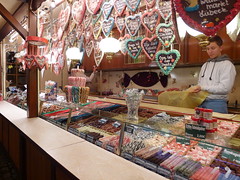
Though the weather was rather dismal (but expected) with temperatures in the forties and rain the whole week, we still braved the brisk and damp weather to take advantage of the famous Christmas Markets in as many towns as we could. The first one we stopped at was Lubeck, Germany, which is a UNESCO World Heritage Site. The Christmas Markets (Weihnachtsmarkt) feature mostly food and hot alcoholic beverages but also a small smattering of seasonal tasties like confections and some giftware like Christmas ornaments, hats, leathergoods and other small items.
The nuts were really appealing, just toffeed nuts of all kinds (photo). Almonds were the most common but each booth had a good assortment of walnuts, cashews and some peanuts. Some had more exotic flavors, the most common was a Christmas spice, but others had licorice or Nutella. The prices were pretty good, a little 100 gram (3.5 ounces) was 2.50 Euro and I believe they would mix if you asked.
The market in Berlin at Alexanderplatz near our hotel also had a small assortment of booths, again, most selling drinks and hot food and a more international fare of gift items (Russian nesting dolls, Indonisian carved bowls) as well as one confectionery stall with a rather large range of traditional candies from Germany and a few that looked more Nordic or Dutch.
The booths that sold Krauterbonbons, and I saw at least three of them in Lubeck, all smelled quite strongly of anise. It was as if they were using aromatherapy to attract customers. Two of the booths looked like they produced the candy right there. They had a copper kettle, a large counter of marble and a small pressing machine that can either cut the little candy pillows from a pulled rope of the hot sugar mixture or mold press them into individual pieces. However, we walked through the Lubeck market twice, once on the night we arrived around 8 PM, then again the next day when we visited the Niederegger cafe at lunchtime. Neither time did I see them making any candy, nor any of the other booths. Perhaps it was all theater, and perhaps it was just something they did in the morning to make their inventory for the day. As it was my first visit to a Christmas Market, I picked up a small bag of their Krauterbonbons Mischung (Herbal Sweets Assortment), which fit easily in my pocket and I thought would travel well.
Inside the homely little plastic bag were 28 pieces in about ten different varieties. The shapes varied, some were just little pillows, others were rather rustic but pressed lumps and then there were the gems with their ornate patterns. They’re lightly sanded to keep them from sticking. I can’t say what the flavors were supposed to be, as there was no key and many of the flavors I purchased were not sold separately (so I couldn’t match them up with the photos I took of the varieties in the jars at the booth). Some were completely foreign to me. The little red puff was at first rather like raspberry, but there was a note of cola and maybe even Dr. Pepper (whatever that flavor is). The light green flattened rod was pure peppermint. It was quite strong and fresh. The black one that looks like a stylized corn cob is dark and sort of like molasses but lacking much else in the herb or spice area. The brown rock looking thing was like a chocolate flavor, it tasted like black bread (Schwarzbrot with an hint of malt. If I had to find an American analogue, it’d be a chocolate Tootsie Pop. I actually liked this one quite a bit, it’s weird getting the flavor of dense, fresh bread in a hard candy. The amber piece with a bee on it was honey, naturally. It was lovely. It tasted like honey and I wanted a whole jar of these, if not to eat, then just to look at. There was also a single clear pillow with some black specks in it. It was a light anise and the exact flavor of the smell they were using to attract folks to the booth.
The light green flower with the cross in the center (back right) was rosemary. It was really refreshing, a little like pine and menthol but without any hint of bitterness. The ribbed one with the cross in the center was like a cough drop, a mix of flavors similar to Ricola. It was minty but not completely peppermint, there was a menthol component and maybe a little touch of honey. The shape was fun to look at, as I kept an example of each on my desk lined up while tasting. The black one with the hammers on it was like the one that I thought was like black bread, but with a strong note of licorice to it. It wasn’t overly sweet and I found it very soothing, especially with some bland, black tea.
If you’re going to be in Germany in the winter, the Christmas Markets are definitely something you should see, if only for a few hours. I think they’re probably more appealing to folks who eat sausage and drink alcohol but the one we saw in Schmalkalden actually had some fantastic looking cheese and cured meats. The architecture of many of these cities is lit up so I really felt like I was part of the place. I was hoping to see more of a variety of sweets, but I fully understand the 90% of the Christmas Market is about tradition and the time warp of walking around a square in the dark with pretty lights and a cacophony of sounds and smells. There were no chocolates anywhere, though some of the stalls sold long ropes of flavored licorices and I actually got a giant Smurf gummi at one of them. The smaller the town we went to, the more they felt like they were true community events, not just something made up for the tourists. Their Christmas celebration through Advent, though front and center at every town, felt less commercial and more about community, even if it was temporary.
(Disclosure Note: The trip to Germany was sponsored, so I did not pay for my airfare, ground transportation, accommodations or food while I was there. At the factory tours we were given generous samples to consume on site as well as some to bring home. Any reviews of those products will be noted as to that fact. But I also brought a couple hundred Euros with me and spent them liberally and almost exclusively on candy both from the companies we were introduced to as well as many other Germany/European products that I found in my prowlings of grocery stores, department stores and the factory outlets.) Related Candies
POSTED BY Cybele AT 12:07 pm Behind the Scenes • Candy • Review • Christmas • Hard Candy & Lollipops • Licorice Candy • Mints • 6-Tempting • Germany • Tuesday, December 20, 2011
Organic Moo Milk Chocolate with Crisped Rice & Corn Flakes
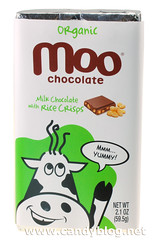
It’s great to see some organic candy products that are formulated just for kids, because most of them seem to be just for adults, with mature palates. The packaging here is easy to read and appeals to youngsters with cartoon cows and simple formulations. It’s really about time someone came up with an organic version of the Nestle Crunch bar.
But the big question becomes, why organic chocolate? Is it better than traditionally grown chocolate? Well, yes and no. Traditionally grown cocoa is fraught with pests, so most of the cacao grown is treated with a variety of inorganic pesticides. Because of the way the cacao beans are situation with a hard pod, and the fact that most treatments are on the canopy of the tree (not in the soil) means that very is absorbed or becomes a residue in finished chocolate. (For example spot tests in the UK have found very low levels of Lindane at less than .02 mg per kilogram in about 45% of chocolate tested.) Chocolate is a very small part of our diet (about 12 pounds per person per year in the US), so that’s a very small, very slowly ingested amount. But children are smaller and more susceptible to toxins, so it’s understandable that many parents want to limit their exposure. There’s also the fact that the farm workers who apply the stuff are exposed to it at much higher levels and are for more likely to suffer from side effects than we would be. So you have a choice now, organic chocolate is available. But how does it taste?
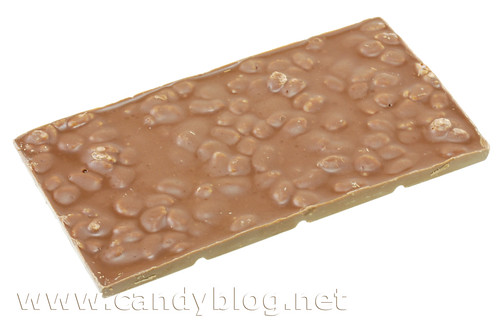
The Organic Moo Milk Chocolate with Rice Crisps bar is made with all organic ingredients, including organic crisped brown rice. Even the packaging is made from recycled paper. The bars are big, 2.1 ounces for this one, and a lot of crisped rice there when I flipped it over.
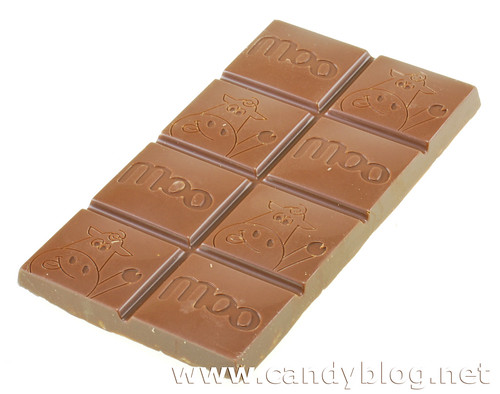
The bar smells milky and sweet, but has a toasted sugar and malty cereal scent to it ... along with a kind of musty odor, a bit like hot cocoa but also slightly reminiscent of wet paper. The texture is quite smooth, much smoother than Hershey’s or Nestle. The milk flavors are strong and a little earthier, but that could be the malt of the crisped rice. It’s sweet, much sweeter than other organic chocolates, as this is a chocolate for kids so it’s a little less intense. The flavor reminds me of the Thompson’s Organic I’ve had before. When I contacted Moo Chocolate to ask about the source of their organic chocolate, they wouldn’t say except that it is Swiss. The crisped rice are crunchy, but also not quite airy and light, as I think many of us might be accustomed to with Rice Krispies. It’s quite satisfying to eat just half the bar (a little over one ounce). The sections (whimsically alternating between a cow and the Moo logo) are easy to break off and small hand friendly. Overall, it’s a great combination of textures, but the kind of goaty flavor of the chocolate is not to my liking, so I’d probably skip this entire brand line. However, kids are often less discriminating and the packaging here doesn’t make this feel like it’s “special”, just that it’s fun and tasty.
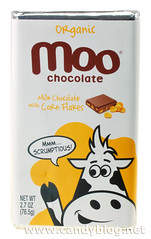
The ingredients are all organic, except for the sea salt. The package has a pleasing yellow color coding, which actually helped me make the natural assumption for corn.
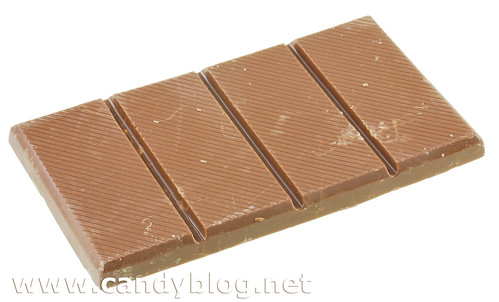
This bar was not as amusing to look at as the Rice Crisps. The mold is generic, and only breaks into fourths instead of eighths. The breaks were messy, as the corn flakes were big and would keep the cleavage irregular. I didn’t get as much of the musty taste in this bar as the Rice Crisps one, but it tasted much sweeter.
The corn flakes are thick and a little rustic. I didn’t find them as light and crispy as the commercial brands though I’d probably love them in actual milk. I wanted to like this bar, because of my deep devotion to the Ritter Sport Knusperflakes (milk chocolate and corn flake bar), but the textures, chocolate flavor notes and ratios just weren’t there. Plus it cost more than twice as much. I did a little research about organic chocolate versus traditionally grown for this post. It’s hard to find independent information on the subject, as most publishers of information freely available are biased one way or the other (usually in favor of selling their own product). This article was well researched with plenty of citations, if you want to read more on the subject. As far as my opinion, it would be good to reduce pesticide use through sustainable methods that both preserve the ecology of the plantations, are safe for the workers and the final consumers. For the latter folks though, chocolate is such a small part of our diets, there are far better places to spend your money to reduce pesticide residue exposures. I would advise prioritizing the “dirty dozen” and working from there. If you’re a parent looking for something a little more wholesome for your kid, the Moo Chocolate brand is well rounded and a good bet. Of course with all things organic you’re going to pay more. Ultimately, I’d like to see Fair Trade go with that and maybe some diversity of package sizes (little one ounce bars are more appropriate for kids). A great stocking stuffer, they’re available at Whole Foods and other stores that sell natural products. They’re Kosher and contain milk and soy. Also made in a facility that processes wheat, peanuts and tree nuts. Related Candies
POSTED BY Cybele AT 1:27 pm All Natural • Candy • Review • Chocolate • Cookie • Organic • 6-Tempting • Switzerland • United States • Whole Foods • Monday, December 19, 2011
Chimes Orange Ginger Chews
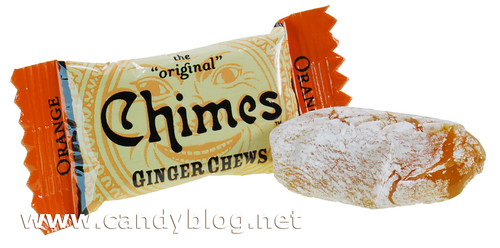
For a sugar candy, they’re a little expensive, $2.99 for only five ounces. But they’re well packaged to keep the product fresh and the pieces are small so you get a lot of them. The package says that it’s made with Pure Java Ginger. I have no idea what the reputation of ginger from Java is, the only ginger that I’ve actually noticed I eat a lot of is Australian ginger. (But Wikipedia cites that India grows the most.)
The initial flavor, after the dusting of sweet powdered sugar goes away is orange zest and a bit of orange juice. The chew is stiff at first, but gets pretty sticky as it softens up in the mouth. The dissolve is smooth and then it gets quite warm from the ginger. I didn’t get much of the rooty and earthy flavors, because the orange was so strong. But there was a very strong heat from the ginger. The pieces are small, but pack enough punch for the size. My biggest frustration was with the little sealed wrappers on the pieces. They were devilishly hard to open, and then inside there was a bit of powdered sugar with varied and could be messy. Luckily folks are used to seeing me dusted with confectioners sugar and have never accused me of having a coke habit. It’s a nice hot weather treat, you can really abuse them since they don’t melt and won’t leak out of the sealed wrappers. Ginger is great for upset tummies as well, and the flavor is fresh and invigorating so good for keeping you up without caffeine. I’m still most fond of the traditional just ginger version, but if you’re looking for something that’s not quite so gingery, this is a good starter option. Related Candies
POSTED BY Cybele AT 12:56 pm All Natural • Candy • Review • Chews • Ginger • 7-Worth It • Indonesia • Friday, December 16, 2011
Ginger People Spicy Apple Ginger Chews
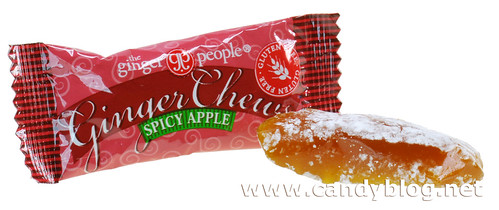
The package for the Spicy Apple Ginger Chews features The Ginger People‘s mascot, an anthropomorphic gingerman sitting on a pile of apples, eating a ginger chew. Kind of weird looking as well as creepy when you think of him being cannibalistic. Soft and spicy apple-ginger candy. Natural, stimulating and delicious. The candy comes in a small stand up pouch. It has a zipper seal, so it can be closed up. Reclosing is hardly necessary to keep it fresh though, as each piece is maddeningly sealed in un-tearable plastic that says “tear here” with an arrow at one end.
The pieces are about an inch and a half long, rather flat and kind of sticky. There’s a powdered starch coating on the outside to keep it from sticking too much. The chew is smooth, the ingredients have no dairy in them, so I can’t call it a caramel. It’s made of cane sugar, ginger, tapioca starch, apple flavor, cinnamon oil and allspice oil. The flavor is first, and foremost ginger. The woodsy and earthy flavors come out loud and clear then create a warming sensation that last for quite a while, some pieces were hotter than others and created a little soft burn. The apple flavor was vague but present only by comparison to their classic Ginger Chews. The cinnamon and allspice did add a bit more dimension to it, like a spiced cider drink. They’re messy and difficult to get out of their wrappers, but they’re also simple, vegan and refreshing. I like them for traveling, as I sometimes get motion sickness. Folks who are prone to upset tummies (especially for morning sickness) may find them both a fun candy and soothing. They’re a little expensive for a sugar candy at $2 for 3 ounces but the pieces are small and there are a lot in the package. Gluten free and vegan but they’re processed in a facility that also handles peanuts. Related Candies
POSTED BY Cybele AT 6:29 am All Natural • Candy • Review • Roxy Trading Co • The Ginger People • Chews • Ginger • 7-Worth It • Indonesia • Whole Foods • Thursday, December 15, 2011
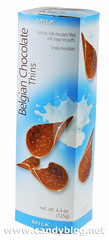
Belgian Milk Chocolate Thins
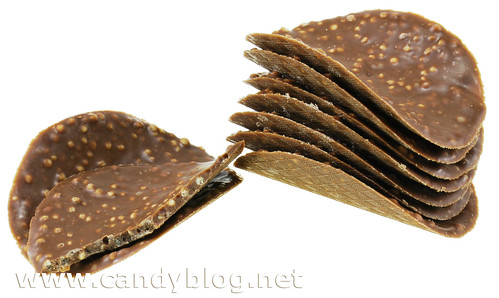
As with many of Trader Joe’s products, they’re actually a much larger product line. I started seeing a nearly identical product in stores like Cost Plus World Market and Target called Belgian Chocolate Thins. In this case they’re made by a company called Royal Chocolates who actually patented their machine process for making these little thins. It’s underUS Patent 6,303,171. The process is kind of simple, according to the patent, deposit a little disk of chocolate on a flexible surface, then before it cools completely bend the sides up. (I’d hazard that Pringles are made in a similar fashion - but are fried while in their little forms.)
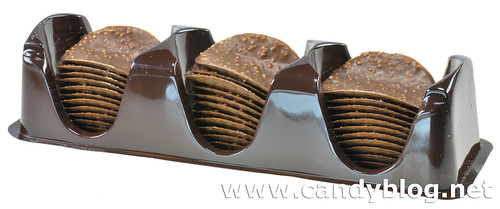
The package describes them as Luscious, milk chocolate filled with crispy rice puffs. Simply irresistible! They come in a tray, which is sealed in cellophane. The tray holds three stacks of approximately 12 pieces. Each little flick is two inches long and an inch and a half across, so a bit smaller than a Pringles potato snack.
The package exhorts buyers to enjoy them all year round and suggests serving them with ice cream, coffee or decorating cupcakes. I think it’s safe to say that simply eating them is also a good year-round option. But I can imagine that they melt much quicker in the summer heat than more solid bars.
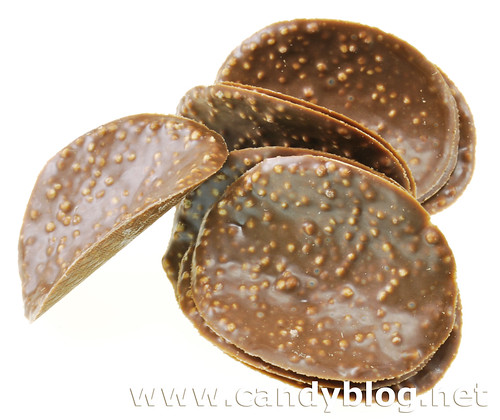
The milk chocolate is rather dark, much darker than UK and American style dairy milk chocolate. The smell as much like sweetened cereal as they do like chocolate. They break easily and melt pretty well too. The first thing I got was a caramelly sweetness. The cocoa notes do come out and are quite woodsy. The rice crisps are crunchy, but not overly present as a texture as they disappear quickly. It does give a little malty flavor to it though. Overall, a good little treat. It’s very easy to manage portions, because each piece is so light but takes a while to consume. They suggest a full stack of 12 pieces (1.5 ounces) but I found that about 8 or 9 was plenty and stretched out the package for four portions. I feel like it’s priced rather expensive, but a Belgian chocolate bar that actually weighs less often costs more. There’s a lot of packaging, but it’s well engineered since every single piece was whole and nothing was melted or bloomed. They come in a variety of flavors: Caramel, Almond, Hazelnut, Dark and Mint. They’re not the first company to make this sort of thing. For a few years Hershey’s made a version called Swoops, which were pricey and didn’t catch on. Fast Company recently did a brief profile on the product line. Belgian Chocolate Thins contain gluten, dairy and soy plus may contain traces of other tree nuts. (There’s no statement about peanuts, but they are made in Belgium where peanuts are less common.) Related Candies

|
Meticulously photographed and documented reviews of candy from around the world. And the occasional other sweet adventures. Open your mouth, expand your mind.
  SEARCHSearch the Candy Blog archives

    
FEATURED NEWS ITEMS
COPYRIGHT NOTICEAll content (text and photos unless otherwise credited) is copyright 2005-2026 by Cybele May Please do not use my photos without prior permission directly from me, they represent what I ate in preparation for these reviews and are not to be used for other purposes. Design by Hop Studios
|
|||||||||||||||||||||||||||||||||||||||||||||||||||||||||||||||||||||||||||||||||||||||||||||


 SUPERB
 YUMMY
YUMMY  TASTY
TASTY  WORTH IT
  TEMPTING
  PLEASANT
  BENIGN
  UNAPPEALING
  APPALLING
  INEDIBLE